Showing posts with label digitech-rp250. Show all posts

Sunday, May 11, 2008

Distortion: The Ultimate Electric Guitar Effect

The electric guitar has the ability to produce clean harmonic sounds and beautiful, warm melodies. However, there is no guitar effect as powerful as distortion.

For newbies, distortion is an effect produced by increasing the amplifier gain setting to a high level. The result is a crunchy, cutting sound.

On the lower, heavier gauge strings, such as the low "E" string, distortion produces a "chugging" sound that resembles a deep growl or bark. This type of sound is commonly used in rhythm guitar.

On higher strings, such as the "B" string, distortion creates a "whining" or "crying" sound which makes a perfect effect for lead guitar.

I recommend you play around with some different distortion guitar pedals, such as the Boss Metal Zone. Screw around with the settings and find out what works for you. If you don't want something so intense, feel free to simply increase the gain setting on your amp. The effect works best when the treble and bass are high and the mid-tones are low.

Enjoy!

Wednesday, April 16, 2008

Digitech RP250

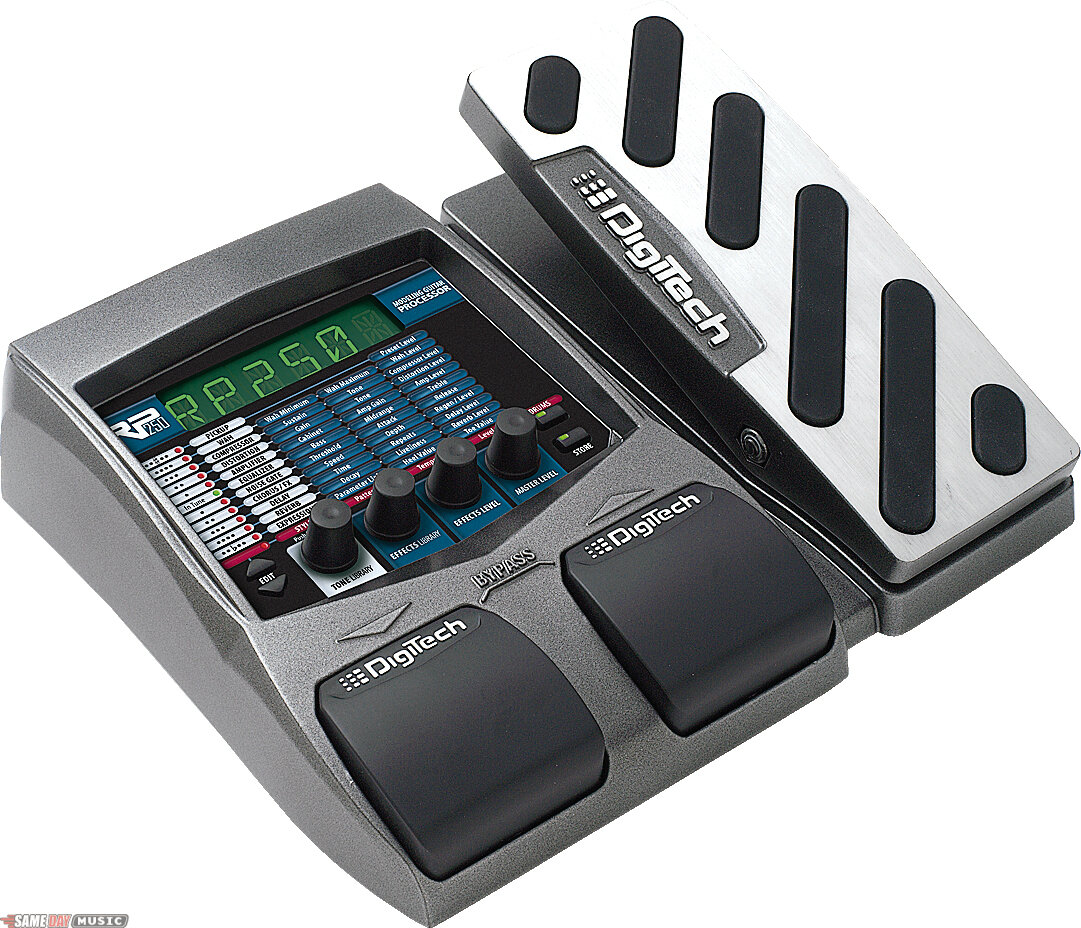
digitech rp250Today I've decided to talk a little bit about one of my favorite electric guitar accessories, the Digitech RP250 multi-effects pedal. This little machine is a great toy. It comes equipped with about 80 preset guitar effects, which can each be customized to your liking.

The Digitech RP250 comes equipped with such effects as chorus, multi-chorus, flanger, delay, reverb, whammy, auto-wah, auto-yah, pitch, and many more. Each effect has its own settings so you can find exactly what works for your desired sound.

Need some more customization? No problem. The Digitech RP250 allows you to choose the type of amplifier you want to play out of. In other words, this machine has the ability to produce a simulated sound that nearly matches the original sound of such amps as Fender, Ibanez, and more!

Ok fine...you need EVEN MORE customization settings. Each amplifier can be set to a specific amplifier cabinet so that you can really get a unique sound. From here, you have the option to play around with the equalizer settings, including bass, treble, and mid-tones. You can choose presets for the equalizer as well as customize the individual settings. This is a great feature on the Digitech RP250.

The built in wah pedal works great. This saves you a lot of money since a good wah pedal is usually over $100.

Another feature I love on the Digitech RP250 is the built-in drum machine. This thing has a great variety of beats, which can each be sped up or slowed down. You can also adjust the volume of the drums, change the drum style, or just turn it into a metronome.

Lastly, the Digitech RP250 has a built-in USB recording device, so you can simply plug it into your computer and record quality sound. The software is free and easy to download from the Digitech website.

Go get your hands on the Digitech RP250. It's under $200 and its worth much more!

Thursday, April 10, 2008

History of the Electric Guitar

I've decided to start off this electric guitar blog with a brief history of the electric guitar. I've always found it interesting to know the origin of the things I take for granted today. Since I love the electric guitar I figured why the hell not list the history on my electric guitar blog. Enjoy:

The concept of the electric solid body guitar developed from the popularity of Hawaiian music in the 1920s and 1930s. The electric Hawaiian guitars were the first instruments to produce sound electrically. And thus begun the history of the electric guitar.

The first electric guitar was created in the 1930s by a man named Adolph Rickenbacker. The first electric guitars had small soundholes in the body. This type of guitar is called a semi-hollow body electric guitar. This type of guitar is still popular today.

Further along in the history of the electric guitar comes the pickups. The first pickups used on the original electric guitars were called tungsten pickups. These electric guitar pickups made it possible to create guitars without the small soundholes. These were named solid body electric guitars or hard body electric guitars.

The electric guitar began to get more popular during the 30s and 40s. During this time of the history of the electric guitar, bands were starting to incorporate its sound in their music. They needed to have

louder guitars to be overheard by sections of their bands such as the brass sections. The acoustic guitars could not produce the necessary volume.

In the 1950s Gibson introduced Les Paul's unique guitar known as the Gibson Les Paul. This guitar is still around today and used by many excellent guitarists.

Then came Leo Fender. He designed the Fender Broadcaster which later became known as the Fender Stratocaster. This guitar is known as the Strat for short. The Fender Strat became an extremely popular guitar.

There you have it, a brief history of the electric guitar. Nothing intense, just a little something to help you appreciate the this great toy that we all take for granted! Keep checking back to my electric guitar blog for daily updates on the electric guitar.