Showing posts with label melody. Show all posts

Monday, February 14, 2011

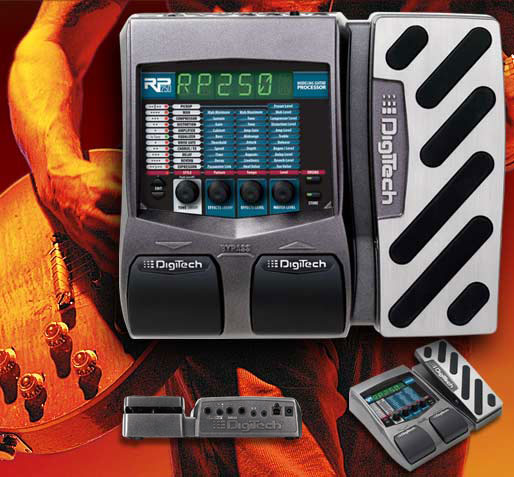
Experimenting with the Digitech RP250


Hey guys,

I was experimenting with the Digitech RP 250 tonight and came up with some cool riffs. I put on a high gain heavy metal amplifier setting, and then set the special effects to what is called "IPS". Basically, IPS allows you to choose which key you want to play in, and it produces a note in the same key only further up in the scale. The produced note is played at the same time as the note you are playing. The result is a great harmony effect.

I threw on some delay and cranked up the bass and let that sucker roar! It's amazing how much shit you can come up with just from screwin' around. In my opinion, the best things in life are created from experimenting with new things. In this case, it was the first time that I really gave much time to the IPS effect.

I created a great drum beat using Sony Acid Pro 6. I'm going to use it when I record a song tomorrow. I am going to take the drumbeat, which is a calm rock beat at 120 BPM, and I am going to place a warm acoustic melody over it. The melody will consist of a four part chord progression, with only two notes of each chord plucked.

As the melody repeats, I am going to put a heavy gain guitar with delay on top of the acoustic guitar. This will produce the effect that the distorted guitar is in the background, and the acoustic guitar is in the front ground. However, I may swap the two, and put the acoustic guitar in the background with the distorted guitar in the front. Or, I may just stick them both in the background. It really depends on the mood that I'm feeling at the time. Creativity is a very controlling thing!

On another note, I realize that I haven't been updating this guitar blog lately. Therefore, I gotta get to it! In the meantime, check out my brand new cartoon logo website. There's a lot of great stuff on there and feel free to order a design if you are interested.

Sunday, January 16, 2011

MIKE PORTNOY WILL BE DRUMMING WITH A7X


After having had such an amazing experience recording my drum tracks for the new Avenged Sevenfold album, we all knew it would be awesome if I'd be able to do some touring with the band after its release...
I am happy to say that the timing worked out perfectly that my touring cycle with Dream Theater (and Transatlantic) was coming to an end just as A7X's was scheduled begin!
(well, perfect for everyone except my poor family!) : )
Although I wish I could stay on board with A7X in a more permanent capacity, the reality is that I am committed to Dream Theater as my main priority (that is my baby after all!), and I will need to resume work with DT to start a new album at some point in 2011....
However, I will be able to join my brothers in Avenged Sevenfold for at least the duration of their touring throughout 2010...and hopefully this will give them the time to continue to heal and get comfortable back on the road....
You can look at me like the band's "rebound drummer" to buy them some time until they are comfortable and ready to make a commitment to somebody new for full-time relationship in their future!
In the meantime, I am real excited to hit the road with the boys...to bring my drumming from their new album to life on stage and to honor The Rev with all of their older material....

Wednesday, August 18, 2010

Improvisation and melody

Melody and improvisation is an instrument or a variation in playing music. There are differences between the two, if the melody is a game notation without rhyme (instrumental) with chord accompaniment rhitem and round, while improvisation is played out notation of the original melody, but still in rhitem and round the same chord. Improvisation is usually played in Interlude song or between rounds of the first song to song to the second round. Melody and improvisation can be played in single (soloists) with musical instruments piano, guitar, violin, keyboard, or a saxophone. Improvisation in the play, someone is required to package the original melody notation with a variety of techniques, so that the resulting notation is more varied, innovative, and can build and influence the listener or the emotions of the beholder. Thus, it is woven from two-way communication between players and listeners.
Improvisation is not a difficult game to learn. Usually the difficulty in charge of melody and improvisation due to lack of exercise and prefers to play games in high-speed notation or use excessive effects. So in this case did not prioritize the aspects of harmony, including whether the content is played notation can be enjoyed by the layman or not. Improvisation is not only played a notation and shows skill in playing musical instruments, but more important is how complete the materials (content) used in these improvisations, so that listeners will "float" along with the material presented.

Playing improvised yet players could be called improvisation (improvisator). However, improvisation was a stage play to be able to play different notations with the original melody. A person can be said as improvisator if he has to understand and be able to play notations outside the original melody to include various elements contained therein.

1. Melody and improvisation

A. Birth of Improvisation
Born improvised music in line with the birth of her genre "blues". Blues is the thrill of Negro slaves who wanted freedom due to the system of slavery. Slaves diamonds from Africa are forced to work on plantations owned by Europeans in America. Especially along the Mississippi in the 18th century. Their behavior is limited, even to communicate with each other was strictly prohibited. Communication they do is sing and whistle they contain a string of tunes that make up the melody. This is the forerunner to the birth of the blues-jazz and world music concepts.

Finally, hope and their desire to obtain and enjoy the freedom achieved also by the abolition of slavery in the American system. Every day happy negro slaves singing, dancing, especially along the streets of New Orleans. Their singing style was called a "Blues" or moans of sadness that poured into the form of song. Furthermore, many Negro slaves who began playing musical instruments to accompany the legacy of master their singing (Blues). Scales created a Negro slave creation product which is called the scale "Blue Not" or more popular with Blues pentatonic scales. Blues music evolved into jazz and blues music form other branches, such as the Country Blues, Urban Blues, Blues, 12 Bar, and Rhitem and Blues.

Jazz is one genre of music that comes from Blues music and was influenced by classical music is often listened to by their employers in a banquet and dance antarkerabat. Nuances of classical music to inspire harmony of the creation of the patterns of harmony Jazz melodies. Besides Jazz also influenced by the Marching Band. as well as Blues, Jazz was developed to form other styles, including Ragtime, Boogie woogie, Swing, Bebop, Fusion, Jazz Rock, Jazzy, Foxtrot, Samba, and Bossa Nova. Jazz music plays one form of rhythm dasri Swing, Bebop, Fusion must be prosecuted or the existence of development and creativity that is called "Improvisation". In the playing improvisational notation needed materials or materials that will be formed into patterns of improvisation. To be able to walk harmonic improvisation, improvisation techniques are required, engineering dynamics, and engineering appreciation. Improvisation is said to be perfect if accompanied by expressions (appreciation), harmony (classical music), and progressive (the spirit of marching band).

Basically Blues, Jazz and improvisation has the same meaning, namely the desire to obtain "freedom" berekpresi in producing copyrighted works without being tied by the existing rules. Improvised music in the game is to play music without being tied to the composition of the basic melody, but still in the music chord rotation concept. From the above understanding, Blues, Jazz and Improvisation can be summarized as follows.
- Blues is the volatility of the latent desires and shackled to live freely and determine their own lives without being tied down by rules imposed.
- Jazz is the musical potential in people that one of them gave birth to various forms of rhythm, such as Ragtime, Boogie woogie, Swing, Bebop, Fusion, Jazz Rock, Jazzy, Foxtrot, Samba, and Bossa Nova. Musicality include instinct, instinct, thought patterns, emotions, expression, feelings, and harmony of music into one entity.
- Improvisation is the potential for creativity in the person who always had a desire to make changes and create new things.

Improvisation is berekpresi freedom and creativity to produce new works that are more innovative. In menjabarkannya not as simple notations outside playing original songs, although this is already known to play improvised music. But there are rules that must be understood and dominated, so the product of improvisation or the result of improvisation games you sounded beautiful, harmonious, and progressive. Improvisation is expressive, the meaning of good and evil a product of improvisation is very much determined by the condition of emotions and feelings of people who are playing it. If you're feeling uncertain, the resulting improvisation certainly sounded less good. on the contrary, if the feeling was festive and fun, improvisation produces beautiful sounds, harmonies and vibrant.

Playing improvised yet players could be called improvisation (improvisator). Improvisation is the stage play to be able to play different notations with the original melody. Someone could say improvisator if he has to understand and be able to play the notations outside the original melody to include various elements as follows.

1. Competence (skill)
Strong technical, physical, Seta familiar with the theory and the basics of improvisational games for all types of music and rhythmic character.

2. Capacity (capacity)
Have the insight and ability to interpret and implement the material or materials to be formed into improvised notation.

3. Harmony
Has a good sensibility in express, create and establish patterns and improvisation to build power lines into a product improvised harmony.

A improvisator need to understand the principles of improvisation, mastering the material, and improvisation techniques. Improvisation is not just making an entertaining show, but a reflection of the creativity that as difficult as any play, but even laymen can easily understand it. In this case eksperial Blues is the basis of learning in the process of recognition and learning to become a improvisator. Playing the Blues improvisation can fill out and educate you to play with great character and appreciation. Improvisation is the show itself. This will be the most effective media to promote your expertise in playing, choosing units such as the tone becomes structured concepts in the story theme, climax, and closure.


B. Improvisation Technique
Improvisation techniques need to be controlled by a improvisator improvisation more perfect games. Here are some frequently used improvisation techniques.

1. Glissando
Technique Improvisation Games memainkanm by successive tones (up or down) in a series of tones.

2. Arpeggio
Improvisational techniques in a way the game plays successive tones of a chord formed.

3. Motion Conjunt
Movement techniques through improvisation games every note melody is closely connected with the nearest tones.

4. Parallel Motion
The technique of improvisation by playing games tones simultaneously within one interval.

5. Similar Motion
Improvisational techniques in a way to play the game (note up or down) simultaneously.

6. Contrary Motion
The technique of improvisation games with a tone to play some part. One part to the high level, while the next section down.

7. Motion oblique
Improvisational techniques in a way the game plays tunes separate from the other.

8. Improvisation Technique With Dynamics
Here are some of the dynamics of improvisational techniques.
o Articulation
The technique of improvisation games with sounds a tone for the tone correctly, clearly and firmly.
o Intonation
The technique of improvisation games with tone for tone and a pressurized correctly.
o accentuation
Technique game with sounds improvised passages with pengatan notations (Accents).
o tremolo
Is a technique of improvisation by playing each game repeatedly notation.
o Legato
The technique of improvisation by playing games notations length in the pattern of improvisation.
o staccato
Improvisational techniques in a way the game plays notations are disjointed.
o Cressendo
Improvisational techniques in a way the game plays notations are becoming increasingly hard.
o Vibration
Improvisational techniques in a way the game plays notations are vibrating or undulating.


[Improvisation notation for study materials reviewed at the next session]